

Specialist Dementia Care in Taunton: A Guide for Families
Dementia rarely announces itself as a single, dramatic turning point. More often it builds gradually, through a missed appointment here, a repeated question there, until a family realises quite suddenly that the level of support needed has outgrown what they can manage between them. If you are exploring specialist dementia care in Taunton, understanding exactly what this support involves makes the decision much easier to reach, and to live with. This guide explains what specialist care includes and how it can help protect your loved one's quality of life and support your whole family.
What "Specialist" Dementia Care Actually Means
When exploring support options, it helps to understand what "specialist" dementia care actually provides compared to general residential care. A specialist environment is designed from the ground up to address the unique ways dementia affects memory and behaviour. This distinction matters because general care settings often lack specialised training. The Alzheimer's Society notes that while 70% of care home residents live with dementia, only about a third of the workforce has received specialised dementia training. Choosing a specialist home means your loved one is surrounded by professionals who know how to respond to the changing stages of the condition, which becomes particularly important as safety risks increase over time.
Recognising When Home Care Is No Longer Enough
Most families arrive at this point gradually rather than through one obvious event. The warning signs usually cluster around safety rather than memory alone. For instance, a hob might be left on, or a period of wandering might end with someone being found far from home. Medication might be taken twice in a day or missed altogether, leaving a family carer genuinely exhausted after months of disrupted sleep. None of these signs alone means residential care is the only option, but together they usually signal that supervision needs to be more consistent than scheduled home care can provide. It is at this stage that the type of support required starts to look quite different depending on how far the condition has progressed.
How Care Needs Change From Early Stage to Advanced Dementia
In the earlier stages, effective care works as a scaffold around independence rather than a replacement for it. This phase focuses on maintaining daily routines, using orientation cues, managing medication, and ensuring enough social contact to prevent a person from gradually withdrawing. As dementia advances, needs naturally shift toward hands-on assistance with eating, mobility, and personal care. Communication also changes, relying less on complex conversation and more on tone of voice, familiar faces, and a predictable daily rhythm.
A care setting that is only equipped for one end of this spectrum often forces a second, highly disruptive move later on, typically at a time when a resident is least able to adapt to new surroundings. To prevent this, standard best practices favour environments that accommodate the full continuum from early-stage support through to advanced care, including flexible options like short-term respite. This continuity ensures that a change in physical or cognitive needs does not automatically require a stressful change of address.
Why the Physical Environment Plays Such a Large Role
Dementia impacts how a person perceives and navigates physical space, making intuitive environmental design crucial for reducing anxiety and disorientation. Specialised care environments address this by prioritising clear sightlines, visual cues, and distinct landmarks over long, uniform corridors. Rather than focusing purely on decorative styling, effective design utilises structured spaces like reminiscence courtyards with historical objects to spark recognition and aid orientation. Similarly, sensory gardens use specific textures, scents, and colours to provide gentle engagement for individuals who find conversation tiring, while structured indoor acoustic environments help ease agitation, as explored in research on music therapy for dementia.
How Day-to-Day Care Is Actually Planned and Reviewed
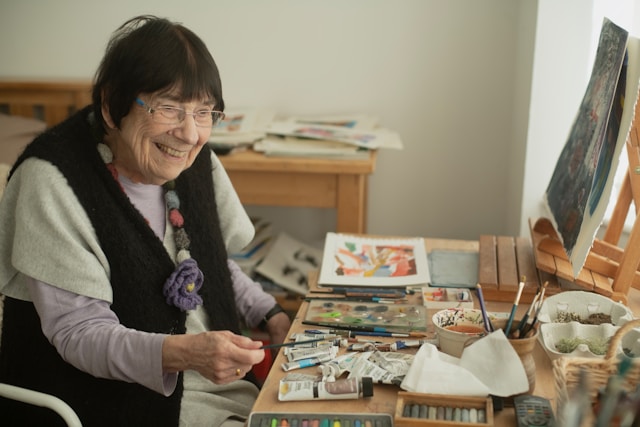
Good design and trained staff only work well if there is a clear structure holding the care itself together. Clinical guidelines recommend that a single professional should coordinate a person’s care. This person develops the support plan and ensures information is passed smoothly between different medical settings, so families do not have to repeat the same history every time something changes. These support plans should always be built and reviewed together with the individual and their family. Progress needs to be recorded regularly, rather than waiting for annual check-ins. This flexible approach allows daily medical care to adapt naturally as needs shift, instead of keeping a plan fixed at admission. When it comes to daily activities, best practices focus on tailored, evidence-based options. This includes group cognitive stimulation therapy for mild-to-moderate dementia, which is why activity programmes in specialist settings are highly structured rather than just a general timetable of hobbies. However, because dementia changes over time, this daily planning should also evolve, ensuring that support remains seamless as a person's needs deepen.
Dementia Care Toward the End of Life
Because dementia is a progressive condition, daily care planning must eventually adapt to deeper, long-term health needs. The hardest part of planning for many families is not managing today, but understanding where care goes in the future. Clinical guidelines recommend offering flexible, needs-based palliative support early in the journey, rather than treating it as a separate service introduced only in the final stages.
Palliative care in dementia is not about the immediate end of life. Instead, it is about comfort, symptom management, and reducing stress for families well in advance. In practice, this means a person's care plan evolves gradually alongside input from GPs and district nurses, allowing them to remain in familiar, supportive surroundings. This model of integrated support is central to how environments like Cedar Lodge approach palliative care, ensuring continuity and comfort as a resident's physical and cognitive needs change over time.


What to Ask When Comparing Care Homes in Taunton
With several choices available across Taunton, finding the right setting requires looking closely at how a home handles the complex, daily realities of long-term care. When evaluating different environments, families can gain valuable insight by exploring the depth of staff training, specifically looking at how much dementia-focused education the team receives and how frequently care plans are reviewed with family input. It is equally important to determine whether a home is equipped to support a resident seamlessly through to advanced and palliative stages, or whether a further, disruptive move will be required as their medical needs deepen.
Observing the physical layout firsthand allows you to evaluate whether the environment uses meaningful design features to reduce confusion and aid independence, rather than just relying on generic decor. For final reassurance, checking a home's current inspection rating on the Care Quality Commission website provides an objective, independent look at the quality of daily care, giving you a deeper level of confidence and peace of mind before making your decision.
Frequently Asked Questions
What's the difference between dementia care and general residential care?
General residential care supports older adults with everyday tasks such as washing, dressing and meals. Dementia care adds staff trained specifically in the condition's effects on memory and behaviour, along with an environment, such as clear signage and reminiscence spaces, designed to reduce confusion rather than simply provide comfort.
At what stage should someone move into a dementia care home?
There's rarely a single fixed point. It's usually when safety at home becomes inconsistent, through unsupervised wandering, missed medication or a family carer reaching exhaustion, rather than tied neatly to a particular diagnosis stage.
Can a care home support someone through to advanced dementia without a further move?
Not always. It's worth asking directly whether a home's registration and staffing cover advanced dementia and palliative care, or whether they're set up mainly for earlier stages.
If you'd like to talk through what specialist dementia care could look like for someone you're supporting, Cedar Lodge's team is happy to answer questions or arrange a visit.